October 02, 2026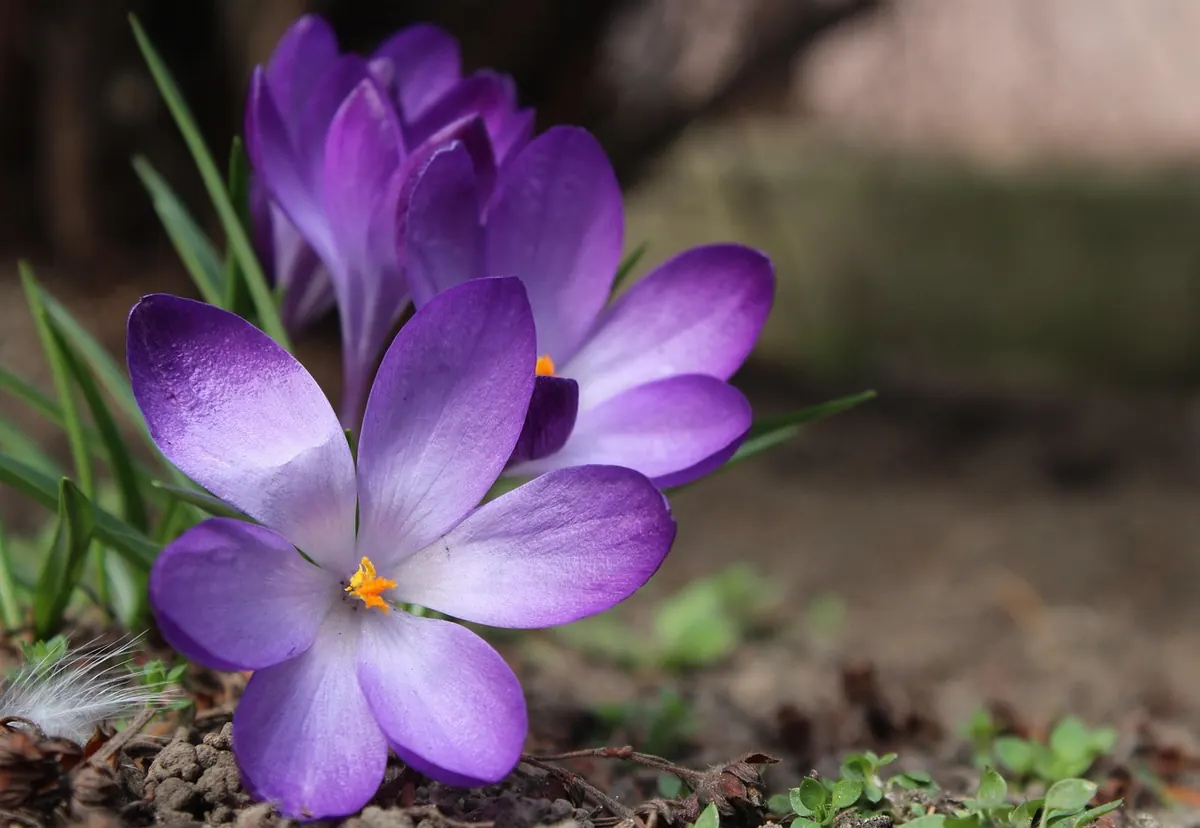
Saffron is the costliest spice by weight on most kitchen shelves, which is precisely why so many British gardeners now grow their own. Crocus sativus is a small autumn-flowering crocus that asks for three things: sun, sharp drainage and a dry summer rest. Offer it all three and a modest handful of corms will flower from October into November, giving you a small jar of crimson threads for almost nothing.
Those threads are the dried stigmas of the flower, and they are harvested by hand — which explains the price. It takes roughly 150 flowers to produce a single gram of dried saffron, and every flower must be picked and stripped individually on the morning it opens. Grow even thirty corms and you will understand the economics of the spice trade far better than any supermarket label can teach you.
Here is how the year works, month by month, and what to do at each stage.
Why this crocus suits a British autumn
Saffron crocus is sterile, so it never sets seed. It multiplies by producing offsets — new cormlets clustered around the parent — and by those corms alone. Its rhythm runs against the usual garden calendar: it flowers in autumn, sends up leaves through the winter, builds its corm in spring, then vanishes entirely by early summer.
That summer dormancy is the tricky part. The corm wants to be completely dry from roughly May to August, and a wet British summer on heavy clay is the quickest way to rot a bed of saffron. Solve the drainage question first and everything else gets easier.
On the plus side, the plants are genuinely hardy. Unlike olives or figs, which need mollycoddling on all but the mildest British sites, saffron crocus tolerates hard frost while dormant and shrugs off a wet autumn in most well-drained gardens. The species originated in the mountains of Greece and Asia Minor, where summers are arid and winters cold and damp — a pattern not unlike a good East Anglian or Cotswold year. It was grown commercially in England for centuries, around Saffron Walden in Essex, until cheaper imports from Spain and Iran ended the trade in the eighteenth century.
Buying corms and choosing a planting date
Fresh corms reach suppliers and garden centres from late July. Order early, because good stock sells out by September, and plant them as soon as they arrive.
- Ideal window: late August to mid-September.
- Workable: up to early October, though flowers are often sparse in the first year.
- Too late: November onwards. The corms usually survive, but you will wait a full year for blooms.
A saffron corm looks like a flattened brown chestnut, with a flat base where the roots form and a small pointed tip where the shoot emerges. Buy firm, heavy corms with no soft patches or mould, and choose the largest size you can find — small cormlets can take two or three seasons to reach flowering size. Expect to pay somewhere between 30p and £1 per corm depending on size and quantity; a dozen good-sized corms is a sensible first order.
A corm that is already flowering size will bloom in its first autumn. Anything smaller is an investment in the year after next, so label your plantings and resist the urge to dig them up to check.
Where to plant and how
Full sun, six hours or more, and soil that never sits wet. A south-facing raised bed, a strip against a warm wall or a deep terracotta pot all work well. If your soil is clay, do not plant into it directly; build a raised bed with 20cm of gritty mix on top instead.
- Loosen the soil to a spade's depth and mix in grit or horticultural sand — roughly one part grit to two parts soil — plus a little garden compost for structure.
- Check the pH if you can. Saffron is happiest neutral to slightly alkaline, so add a sprinkle of lime to acid ground.
- Plant 10–15cm deep and 10–15cm apart, flat base down, pointed tip up. Go deeper in sandy soil, shallower in heavier ground.
- Water once, then leave them alone. Autumn rain does the rest.
- Mark the spot with a label. Between June and August there will be no sign of them at all.
For pots, choose something at least 20cm across and use a gritty, free-draining compost. Six to eight corms fit comfortably. A layer of horticultural grit on the surface keeps squirrels off and stops the corms sitting in damp compost.
The year at a glance
October to November: flowering
Slender white shoots appear first, then the blooms — pale lilac petals with three vivid crimson stigmas hanging from the centre and two shorter yellow styles. Each corm produces between one and four flowers, opening over a period of two to three weeks. Pick daily, early in the morning, before the sun has dried the threads.
December to April: leaves
After flowering, thin grass-like leaves push up and grow slowly through the winter. These leaves are doing the real work of the year, photosynthesising to refill the corm. Never cut them, tie them or tidy them away, however scruffy they look in a winter border. Keep the ground free of weeds, which compete for light and nutrients, and watch for slugs on mild, damp nights.
May to June: die-back and corm building
The leaves yellow and collapse, and the corm swells with the season's stored energy. Stop watering at the first sign of yellowing.
July to September: dormancy
Nothing visible above ground. Keep the site bone dry — no irrigation, no mulch, no watering "just in case". Pots can be moved to a dry, airy shed or laid on their sides to shed rain. On heavy clay soils, or in a wet summer, lift the corms once the foliage has died, dry them in a cool dark room and store them in a paper bag until replanting in September. This is the single most useful habit for British growers in wet regions.
Harvesting and drying your threads
Use tweezers or a fingernail to pluck the three red stigmas from each flower, leaving the yellow styles behind — they add bitterness and bulk, not flavour. Dry the threads on kitchen paper in a warm, dark, airy room for two or three days, or speed things up in a dehydrator or a very low oven (around 40°C) for 20 to 30 minutes until they are brittle but still dark red. Store them in a small airtight jar away from light, where they will keep their colour and aroma for at least a year.
Common problems and how to fix them
- Corms rot in summer: drainage, always. Lift and store them dry, or move pots under cover.
- Squirrels and mice dig them up: lay netting over the bed or plant through a gravel mulch, and check pots regularly.
- Sparrows peck the flowers: drape fleece over the patch during the fortnight of flowering.
- No flowers in year one: usually small corms rather than bad luck. Wait, feed nothing, and let the leaves do their job.
- Mould on stored corms: they were not dry enough before storing. Discard affected corms and dry the rest further.
One warning worth repeating: do not confuse saffron crocus with meadow saffron or autumn crocus (Colchicum autumnale), which flowers at the same time with similar pale blooms but is seriously poisonous. Colchicum flowers without leaves, and its stigmas are not crimson. If you inherited a clump and are not certain what it is, do not eat it.
Leave them alone and multiply
Saffron crocus resents disturbance but rewards patience. Left in place, each corm buds off two or three cormlets a year, so a dozen corms can become fifty within four or five seasons. If you want to lift and divide, do it in the dormant window in July, separating the offsets and replanting them straight away at the same depth. Larger offsets may flower that first autumn; the smallest will take two years. As the clump thickens, flowering becomes heavier — a patch that gives you a dozen threads this year might give you a hundred in three.
Start small, get the drainage right, and treat the summer as the season that matters most. Everything else about saffron is simply a matter of waiting for October.
Photo: _Alicja_ / Pixabay