September 16, 2026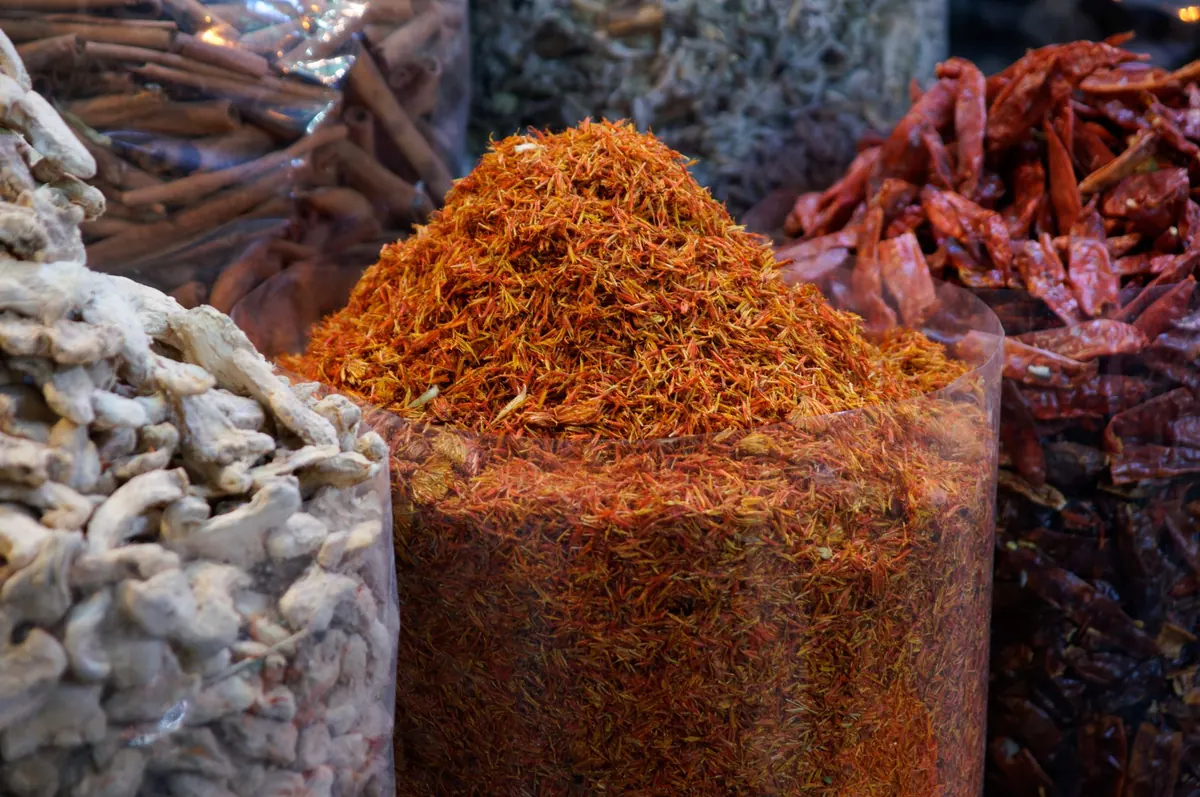
Saffron has a reputation problem. It is the most expensive spice on most supermarket shelves, it arrives in a jar the size of a thimble, and plenty of cooks buy it, admire it, then leave it at the back of the cupboard for two years. Cooking with it is not difficult. It asks for a pinch of threads, a few minutes in warm liquid, and a dish simple enough for the flavour to show. The five recipes below are the ones to start with.
What saffron actually tastes like
Describing saffron is awkward. Honeyed, hay-like, faintly floral, with a slightly bitter, almost metallic edge — but not sweet in the way honey is sweet. It is also subtle. A dish loaded with chilli or drowned in raw garlic will bury it completely, and you will end up wondering what you paid for.
It gets on well with eggs, rice, cream and milk, butter, chicken, fish, potatoes, almonds and pistachios. Warm spices such as cardamom, cinnamon and cloves suit it, as does citrus zest and tomato. Salt matters more than you would think: a pinch of salt sharpens the aroma considerably, which is why saffron rice tastes flat when it is under-seasoned.
Bloom it first — the step most people skip
Saffron threads dropped dry into a cold pan do almost nothing. The colour and aroma are water-soluble, so they need liquid and a little time before they meet the heat.
- Take a generous pinch of threads — roughly 20 to 30 — and crush them between your fingers or with a pinch of salt in a small mortar.
- Add two or three tablespoons of warm liquid: water, milk, stock, or a spoonful of the sauce you are cooking.
- Leave it for 10 to 15 minutes. The liquid turns deep gold, then orange.
- Tip the whole lot in, threads and all. They are edible and carry flavour.
Boiling water is not necessary and can be harsh; warm is right. Milk takes the colour beautifully and is the best choice for anything creamy. If you are short of time, five minutes in warm liquid still beats adding dry threads.
Five easy recipes
Each of these uses one pinch and serves two to four people. None of them needs special equipment.
Saffron scrambled eggs
Bloom a pinch of saffron in two tablespoons of milk, then beat it into four eggs with a pinch of salt. Melt a knob of butter in a pan over the lowest heat you have the patience for. Pour in the eggs, leave them for 20 seconds, then stir slowly and steadily. Pull the pan off the heat while the eggs still look slightly loose — they carry on cooking — and stir in a spoonful of crème fraîche or cream cheese. Pile onto hot toast. This is the clearest demonstration of what saffron does: the fat in the eggs carries the aroma, and overcooking is the only way to spoil it.
Saffron butter pasta
Melt 60g butter over a low heat with a pinch of saffron threads and a strip of lemon zest. Take the pan off the heat and leave it to infuse for ten minutes while you cook 200g of linguine or tagliatelle in well-salted water. Warm the butter through gently, drain the pasta and keep a mugful of the cooking water. Toss the pasta with the butter, a splash of that water and a handful of grated parmesan until everything turns glossy. Serves two. Do not let the butter brown — its bitterness fights the saffron.
Fragrant saffron rice
Rinse 250g basmati rice until the water runs clear, soak it for 15 minutes, then drain. Bloom a pinch of saffron in three tablespoons of milk and make it up to 375ml with hot stock or water. Melt 25g of butter or ghee in a heavy pan, add a bay leaf, four green cardamom pods and a short cinnamon stick, and sizzle for 30 seconds. Add the drained rice and stir for a minute to coat every grain. Pour in the saffron liquid and a good pinch of salt, bring to a bare simmer, cover and cook on the lowest heat for 10 to 12 minutes. Turn off the heat and leave it, lid on, for another 10 minutes, then fork it through. Do not stir while it cooks. Serves four.
Saffron and lemon chicken thighs
Bloom a pinch of saffron in a tablespoon of warm water, then mix it with four tablespoons of natural yoghurt, the zest and juice of half a lemon, a crushed garlic clove and a generous pinch of salt. Coat six to eight skin-on, bone-in chicken thighs, cover and chill for at least two hours, or overnight. Roast at 200°C (180°C fan, gas 6) for about 40 minutes, until the skin is blistered and the juices run clear. Rest for five minutes before serving, ideally with the rice above. Scoring the thickest part of each thigh helps the marinade get in.
Saffron rice pudding
Warm one litre of whole milk in a heavy pan with 60g of pudding rice, 50g of caster sugar, a pinch of saffron, three crushed cardamom pods and a strip of lemon zest. Bring it just to a simmer — no more — and cook as gently as you can for 40 to 45 minutes, stirring every few minutes and scraping the bottom, until the rice is soft and the milk has thickened. Stir in two tablespoons of double cream and a small knob of butter. Serves four. If you would rather not stand over it, bake it at 150°C fan for about an hour and a half, stirring twice.
Buying, storing and how much to use
A few things worth knowing before you spend money:
- Threads beat powder. Powdered saffron is often cut with turmeric or safflower, and you rarely know what proportion you are getting.
- Look for deep crimson threads with paler orange tips. Uniformly bright yellow or orange strands are usually not saffron at all.
- Store it airtight, away from light and heat — not on the shelf above the hob, not in a clear jar on a sunny windowsill. Kept properly, it holds its punch for a year or more.
- A working amount is a generous pinch, around 20 to 30 threads, for a dish serving four. More is not better; too much tastes soapy and bitter.
For everyday cooking, that is all you need to know. If you are pregnant, breastfeeding or taking medication, and you are thinking of using saffron in large or medicinal amounts rather than as a pinch in dinner, check with a pharmacist or your GP first.
Where to start
Begin with the eggs. They take five minutes, use one pinch, and show you exactly what the spice brings to a dish. Then move on to the rice, which teaches you how saffron behaves when it is spread through a larger quantity of food, and finish with the pudding. Keep a rough note of how much you used and how strong the result tasted; within a fortnight you will stop measuring and start trusting your own pinch.
Two final rules. Don't bury saffron in a heavily spiced curry, where it will vanish without a trace. And don't save it for an occasion that never arrives — a jar sitting untouched for two years is a waste of the best spice in your kitchen.
Photo: Gu Bra / Pexels